
Description
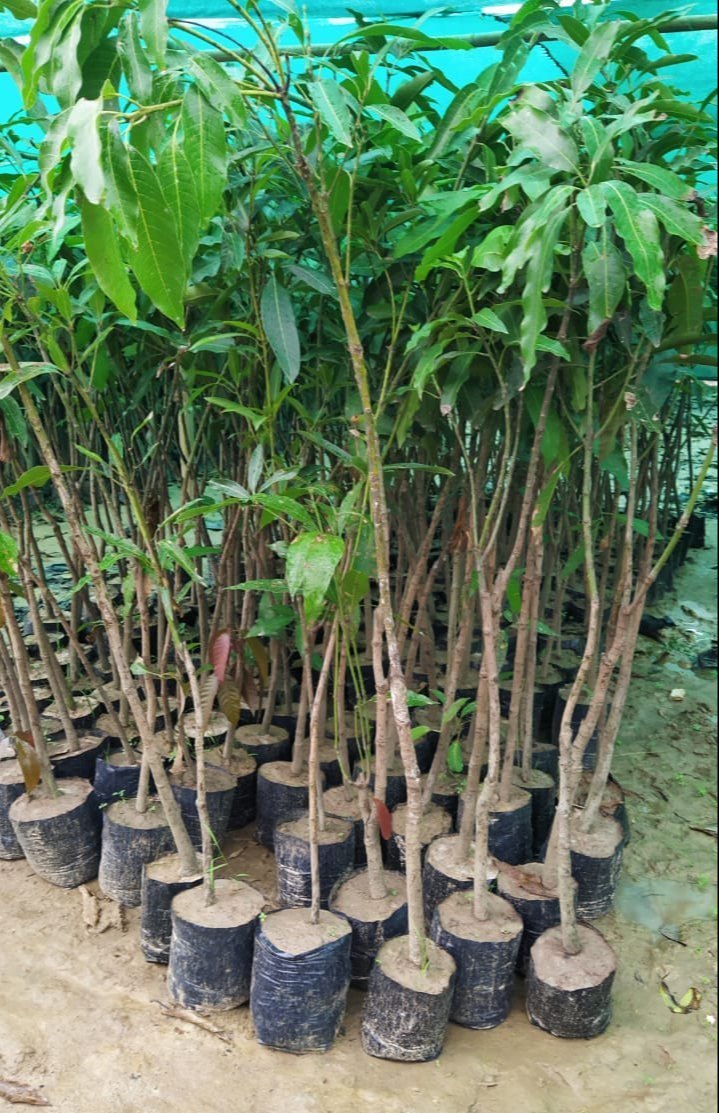
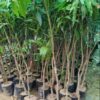
A grafted mango plant is not a distinct botanical species, but rather a tree created by a vegetative propagation technique. It is produced by joining the shoot (scion) of a desired, high-quality mango variety with the rooted seedling (rootstock) of another mango plant. This method is the industry standard for commercial mango cultivation, as it is essential for preserving and replicating the exact characteristics of superior cultivars.
Detailed Description:
-
Size:
Grafted mango trees are typically more manageable in size compared to their seedling-grown counterparts. They generally remain smaller, making them suitable for home gardens, small orchards, and even container growing on patios or balconies. The mature height and spread can vary significantly depending on the scion variety and the vigor of the rootstock used. -
Leaves:
The leaves of a grafted mango tree are identical to those of the scion variety. They are simple, alternate, and oblong-lanceolate in shape with a leathery texture. Young leaves emerge in flushes with a distinctive yellow-green, pink, or copper color, maturing to a dark, glossy green. -
Flowers:
Grafted trees produce flowers much earlier than seed-grown trees. The flowers are small and greenish-white to cream-colored, borne in large terminal panicles. Fruiting can begin within 1 to 3 years of planting, a significant advantage over the 7-10 years often required for seedling trees. -
Fruit:
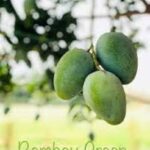
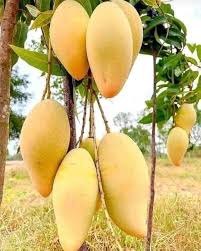
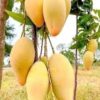
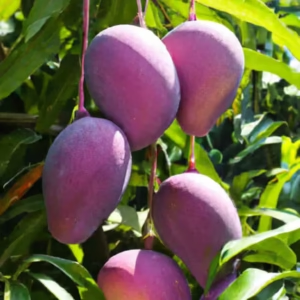
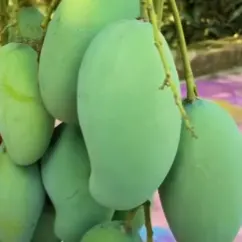
The fruit is the primary reason for grafting. It is a fleshy drupe that retains all the qualities of the parent scion variety in terms of size, shape, color, flavor, and texture. Grafted mangoes are renowned for their superior characteristics, such as a smooth, buttery texture, fiberless flesh, and exceptional sweetness. The exact appearance and taste depend entirely on the specific cultivar. -
Branchlets and Bark:
These characteristics are typical of the Mangifera indica species. The branchlets are stout, and the bark is greyish-brown and fissured.
Other Notable Features:
-
Faster and Reliable Fruiting: This is the most significant advantage. Grafted trees produce fruit in 1-3 years after planting, compared to 5-10 years for seedlings, and they guarantee the same fruit quality as the parent plant.
-
Improved Productivity and Yield: The use of selected rootstocks and scions leads to trees that bear better and more reliably, often with higher yields. Research has shown that grafted trees can have significantly greater total biomass (about 56% more fresh weight) than own-rooted trees, indicating more vigorous growth.
-
Controlled Tree Size and Vigor: The choice of rootstock is a key tool for controlling the ultimate size and vigor of the tree. Some rootstocks are known to induce dwarfing, while others promote vigorous growth. This allows growers to select trees appropriate for high-density planting or small spaces.
-
Enhanced Hardiness and Adaptability: The rootstock can be selected for its ability to tolerate specific soil conditions, drought, or diseases, making the grafted tree more resilient and adaptable to various growing environments than a seedling from a non-local variety.
-
Clonal Reproduction: Grafting is the only way to reliably reproduce monoembryonic mango varieties, as their seeds do not grow true to the parent plant. It ensures that valuable cultivars are preserved and multiplied exactly
Reviews
There are no reviews yet.