
Description
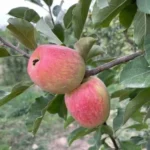
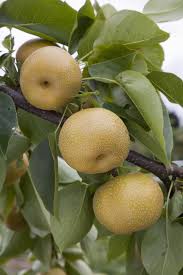
The plant commonly known as Naspati in Nepal and parts of India is the European pear, scientifically named Pyrus communis . It is a fruit-bearing deciduous tree belonging to the Rosaceae family and has been cultivated for its delicious fruit for over 3,000 years .
Detailed Description:
-
Size:
The tree can reach up to 10-20 meters in height, especially in the wild, but in cultivation (particularly with grafting), it is often kept smaller, typically around 3-5 meters for easier harvesting and management . -
Leaves:
The leaves are simple and arranged alternately on the stem . They are broadly ovate or elliptical in shape with a finely serrated (toothed) margin and a pointed tip. The upper surface is smooth and glossy green, while the underside is paler and may have fine hairs . -
Flowers:
Naspati produces beautiful white flowers, each with five petals and numerous stamens . The flowers bloom in clusters (corymbs) of 5 to 11, typically appearing before the new leaves emerge in early spring (around February) . -
Fruit:
The fruit is a fleshy pome, which is generally pear-shaped (pyriform) but can also be obovoid or subglobose . The fruit starts green and turns yellowish-green or yellowish-brown as it ripens . It is known for its sweet, juicy, and slightly gritty flesh, which can be white or yellowish, and may be sweet or slightly tart . The fruit is a rich source of carbohydrates and proteins . -
Branchlets:
The young branches are small, reddish-brown, and relatively smooth, while the older branches form a narrow-angled, pyramidally shaped crown . -
Bark:
The bark of a mature tree is greyish-brown with shallow furrows and square-cracked, scaly ridges .
Other Notable Features:
-
Grafted Naspati Plants: Similar to apples and mangoes, commercial Naspati trees are almost always grafted. This ensures that the fruit is true to the parent variety and the tree begins fruiting much earlier (in a few years) compared to a tree grown from seed .
-
Preferred Climate and Soil: It is a temperate fruit that thrives in full sun and well-drained soil. It requires a period of cold winter chill to produce a good crop .
-
Culinary and Traditional Uses: The fruit is eaten fresh, juiced, and used in traditional medicine. It is valued as a cardiac tonic, and the juice is sometimes used for cognitive health. Unripe fruit is used for its astringent properties . In Nepal, it is an important cash crop in the Middle Hills .
Reviews
There are no reviews yet.