Description
The Lagerstroemia, commonly known as Crape Myrtle, is a genus of flowering plants belonging to the family Lythraceae. With approximately 53 species, the genus is native to tropical and subtropical Asia, ranging from China and Japan through Southeast Asia to northern Australia. It includes both deciduous and evergreen shrubs and trees and is prized worldwide for its long-lasting, showy summer blooms and attractive, peeling bark. Several species are native to or widely cultivated in Nepal, making it an excellent choice for gardens across the country.
Detailed Description:
-
Size:
The size of a Lagerstroemia varies greatly by species. It can be a modest shrub or a large tree. In general, shrubs and small trees can reach heights of 3 to 7 meters. Some larger species, like the Pride of India (Lagerstroemia speciosa), can grow up to 15 meters tall. The popular Crape Myrtle (Lagerstroemia indica) typically grows to a height and spread of 4 to 8 meters. -
Leaves:
The leaves are simple and are usually arranged in an opposite pattern. Their shape is typically elliptic or ovate. The leaf size can vary significantly; in some species, like L. indica, they are about 8 cm long, while in others, like L. speciosa, they can be quite large, reaching up to 30 cm in length and 13 cm in width. The texture can range from papery to slightly leathery. Young leaves often emerge with a beautiful bronze colour, and some cultivars have foliage that turns vibrant colours in autumn. -
Flowers:
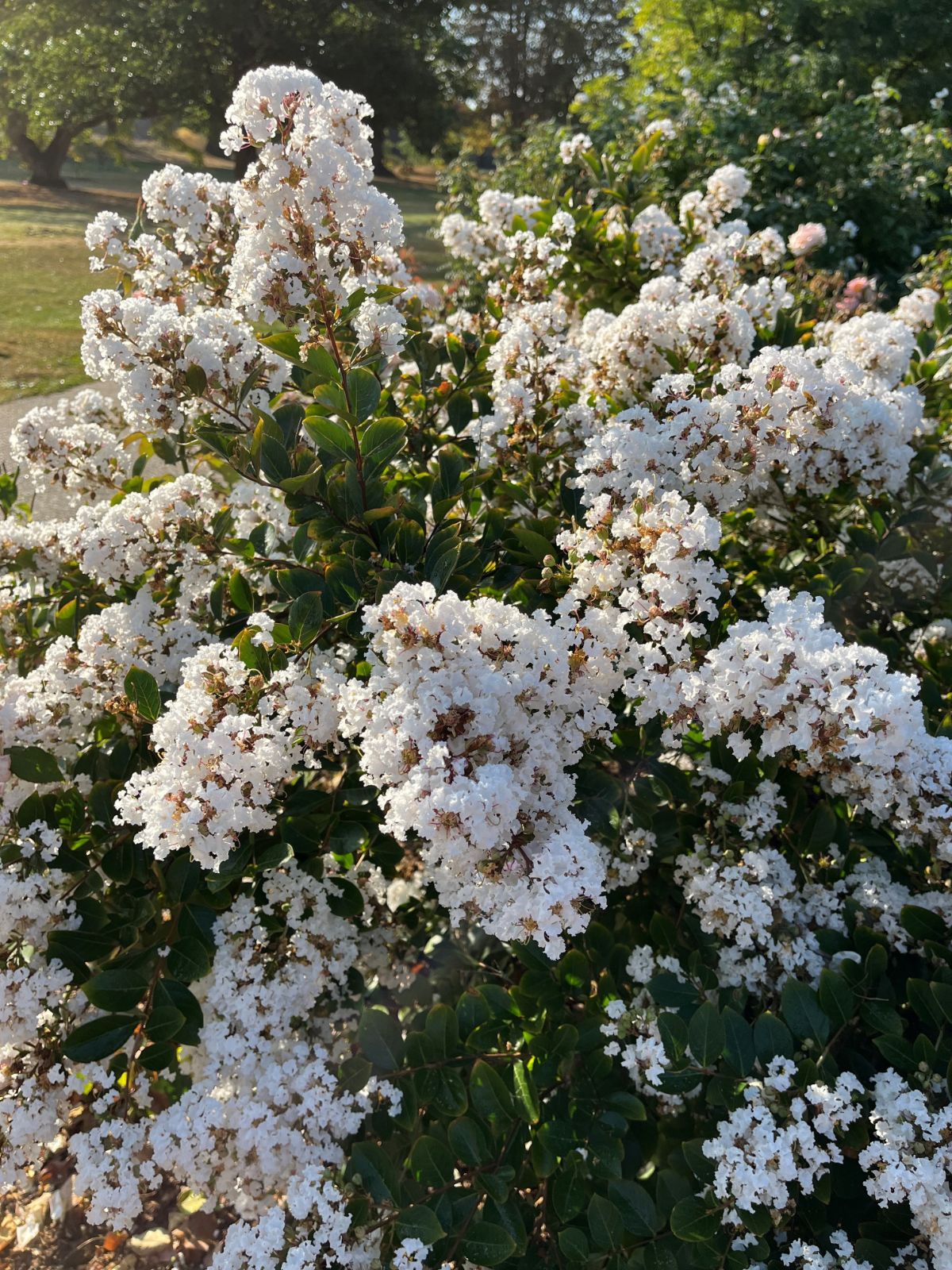
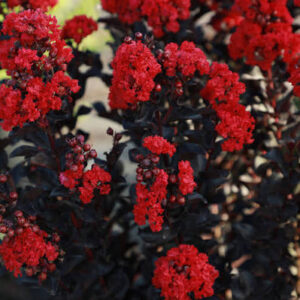
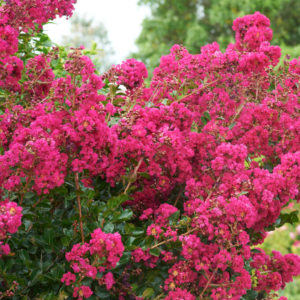
The flowers are the most celebrated feature of this plant. They are produced in large, showy, conical panicles (clusters) that can be up to 20 cm long. The individual flowers have crinkled, ruffled, or crepe-like petals, which is the origin of the common name “Crape Myrtle”. The flower colour is variable, commonly appearing in shades of white, pink, purple, lavender, and fuchsia. A single flower can have 130 to 200 stamens, creating a striking yellow centre. The blooming season typically lasts from summer to autumn. -
Fruit:
The fruit is a woody, dry capsule that is ellipsoidal in shape. When mature, the capsule splits open to release numerous small winged seeds. -
Branchlets:
The branchlets are typically slender and can be four-angled (square in cross-section). They are often covered with fine hairs (puberulous) when young, becoming smooth (glabrescent) with age. -
Bark:
The bark is a distinctive and highly ornamental feature. It is typically smooth and flaky, peeling off in thin, irregular flakes to reveal new bark underneath. The colour is often a mix of brown, grey, and silver, creating a beautiful, mottled appearance.
Other Notable Features:
-
Hardiness:
Crape Myrtles are known for their frost tolerance and resilience. They are not overly picky about soil type but do require good drainage to thrive.
Climate Suitability for Nepal:
The Lagerstroemia is exceptionally well-suited to Nepal’s diverse climate, as the genus is native to the region.
-
Native Species: Several species are native to Nepal, including Lagerstroemia parviflora (found at elevations of 200-800 meters in the tropical Himalayas) and Lagerstroemia indica (found at 1000-1500 meters).
-
Ideal Regions: This wide altitudinal range means different species can be cultivated from the Terai up to the mid-hills.
-
Climate: They thrive in areas with a seasonally dry tropical climate and are well-adapted to the monsoon patterns of Nepal. They prefer a position in full sun for the best flowering.
Why Choose Lagerstroemia from Gupta Nursery:
-
Nepali Native: Several species are native to Nepal, meaning they are naturally adapted to the local climate and conditions, ensuring robust growth.
-
Spectacular Summer Blooms: Their long-lasting, vibrant flowers provide a stunning display of colour during the summer months when many other plants are dormant.
-
Year-Round Interest: With beautiful flowers in summer, attractive foliage in autumn, and interesting peeling bark in winter, this plant offers visual appeal throughout the year.
-
Versatile Use: They are suitable for a variety of garden settings, from borders and beds to containers and as striking specimen trees.
Cultivation Tips for Nepal:
-
Light: Requires full sun for the best flower production.
-
Soil: Prefers well-drained soil and is adaptable to various soil types, including chalk, loam, and sand.
-
Watering: Water regularly, especially during dry periods, but avoid waterlogging.
-
Pruning: Can tolerate hard pruning if needed to control size or shape.
At Gupta Nursery, we are proud to offer beautiful Lagerstroemia plants—a genus with deep roots in the Nepali Himalayas, perfect for adding spectacular summer colour and year-round elegance to any garden across the country.
Reviews
There are no reviews yet.