Description
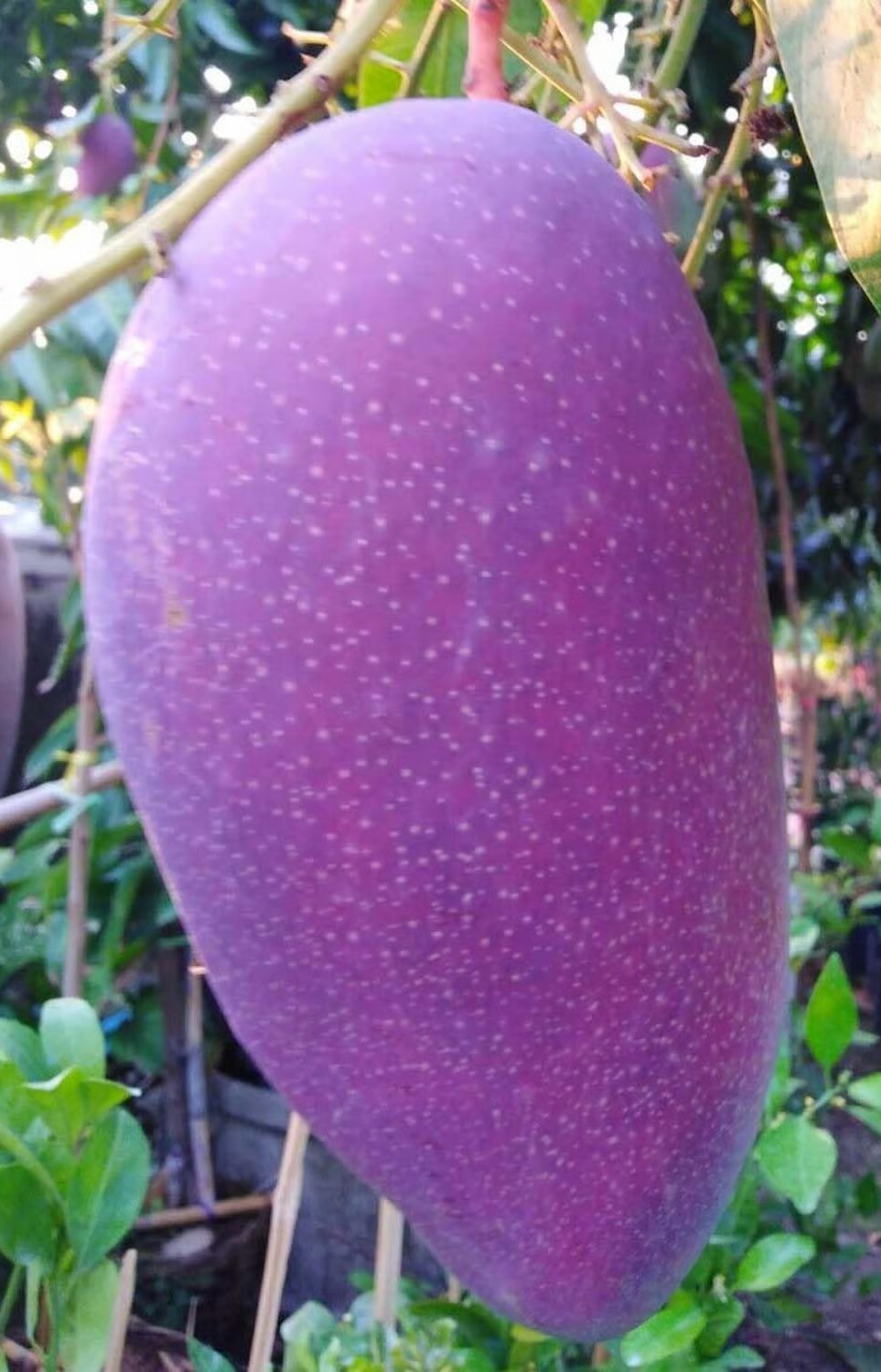
“Purple Mango” is a term used for several distinct, visually striking mango varieties that share a unique deep purple to red-purple skin color. The most famous and expensive of these is the Japanese Miyazaki mango, but there are also other notable purple-skinned varieties, including a large-fruited variety from Taiwan, the Pakistani Shan-e-Khuda (which can ripen to a purple colour), and the Arunika variety.
Detailed Description:
-
Size:
The Miyazaki mango tree is a medium-sized evergreen, typical of the Mangifera indica species. It thrives in tropical and subtropical climates and is known to adapt to regions outside its native Japan. The tree can be maintained at a manageable size with pruning. -
Leaves:
The leaves are typical of the mango species – evergreen, simple, and lanceolate in shape with a leathery texture. -
Flowers:
The tree produces small, greenish-yellow flowers in panicles. -
Fruit:
The fruit is the defining feature of these purple varieties. Their appearance, size, and flavour vary depending on the specific variety.-
Miyazaki Mango:
-
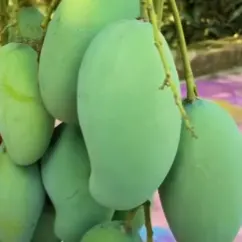
Appearance: This variety is renowned for its deep purple colour that often turns a flaming red as it ripens. Its shape is often compared to dinosaur eggs, earning it nicknames like “Dinosaur’s Egg” and “Eggs of Sunshine”.
-
Size and Weight: Each fruit weighs over 350g.
-
Flesh and Taste: The flesh is completely fiberless, creamy, and ultra-sweet, with a 15% or higher sugar content.
-
Rarity and Price: This is the world’s most expensive mango, selling for $800–$900 per kilogram in international markets (and up to Rs300,000 per kilogram in Pakistan).
-
-
Taiwanese Purple Mango:
-
Appearance: This variety develops an eye-catching purple colour when ripe.
-
Size and Weight: It is notably large, with each fruit weighing 1 to 1.5 kg.
-
Flesh and Taste: The flesh is dark yellow, sweet, refreshing, and fragrant. It has a small seed, is crunchy when green, and becomes soft and sweet when ripe.
-
-
Shan-e-Khuda:
-
Appearance: This Pakistani late-season variety can be found in four colours, including purple.
-
Characteristics: It ripens in October and November, has a thick skin for a long shelf life, and is valued for its export potential.
-
-
Arunika:
-
Appearance: Known for its large size and vibrant red colour.
-
Characteristics: Described as exceptionally sweet, juicy, and rare, often considered a luxury fruit.
-
-
-
Branchlets:
The branchlets are characteristic of the mango species, forming a broad, dense canopy. -
Bark:
The bark is typical of the mango species – greyish-brown and fissured.
Other Notable Features:
-
High Value: Purple mangoes, especially the Miyazaki variety, command premium prices due to their rarity, unique appearance, and exceptional eating quality.
-
Health Benefits: Purple mangoes are rich in antioxidants, beta-carotene, and folic acid. They are good for eye and skin health and may help lower cholesterol.
-
Cultivation Adaptation: The Miyazaki mango has been successfully cultivated outside Japan, including in Karachi, Pakistan, demonstrating its adaptability to similar climates.
Climate Suitability for Nepal:
The cultivation of purple mango varieties in Nepal depends on the specific type, but Nepal’s climate offers excellent opportunities for mango cultivation.
-
Ideal Regions: The Terai region of Nepal is highly favourable for mango production, with optimal temperatures (24–27°C) and adequate rainfall (890–1,015 mm). This makes it suitable for growing premium mango varieties.
-
Mid-Hills Opportunity: Research shows that mango suitability in Nepal is expanding to the mid-hills due to climate change. Late-maturing mangoes grown in these higher altitudes can fetch good market prices because they produce fruit (in August) when the season is ending in the Terai.
-
Adaptation Potential: Given that the Miyazaki mango has adapted to Karachi’s climate, it is likely that it could be successfully cultivated in Nepal’s Terai region with proper care. The Taiwanese purple mango, already grown in parts of Vietnam, may also adapt well to similar subtropical conditions.
Why Choose Purple Mango from Gupta Nursery:
-
Exclusive and High-Value: Purple mangoes are a premium, eye-catching product with high market demand and exceptional fruit quality.
-
Nepal’s Growing Mango Industry: Nepal has a thriving mango industry with significant commercial potential. Late-season varieties in the mid-hills provide a comparative market advantage.
-
Economic Potential: With the right investment and care, mango cultivation in Nepal offers strong financial returns. A 1-hectare farm can generate annual returns of up to NRs 1,296,000 by the 10th year.
Cultivation Tips for Nepal:
-
Climate: Requires a warm tropical to subtropical climate. The Terai region is ideal. The mid-hills are becoming increasingly suitable.
-
Soil: Prefers well-drained soil with a pH of 5.5 to 7.0 and a depth of at least 2 meters.
-
Watering: Adequate water availability is crucial, especially during the dry season.
At Gupta Nursery, we are proud to offer premium purple mango plants – a unique and high-value addition to any orchard or garden in Nepal, combining stunning visual appeal with exceptional sweetness and market potential
Reviews
There are no reviews yet.