Description
The BARI-11 mango, also known as Baromasi (all-season) mango, is a remarkable variety released in 2015 by the Bangladesh Agricultural Research Institute (BARI) . This variety is celebrated for its ability to bear fruit multiple times a year, breaking the traditional mango season. It is gaining popularity as a high-yield, low-maintenance option for both commercial growers and home gardeners across South Asia, including Nepal.
Detailed Description:
-
Size:
The BARI-11 mango tree is known for its compact size, typically reaching only 6 to 7 feet in height . This manageable stature makes it an excellent choice for small gardens, backyards, and even large pots or terrace cultivation . -
Leaves:
As a variety of Mangifera indica, the tree features the species’ characteristic evergreen, simple leaves—lanceolate in shape and leathery in texture. -
Flowers:
The defining feature of BARI-11 is its continuous flowering habit. It produces flowers (mukul) three times a year: typically in November, February, and May . A single tree can simultaneously display flowers, tiny fruit, raw fruit, and ripe fruit, showcasing the mango’s full ‘life cycle’ at once . Grafted trees can begin flowering as early as one year after planting . -
Fruit:
The fruit of the BARI-11 is highly distinctive:-
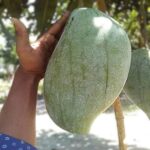
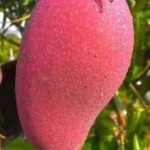
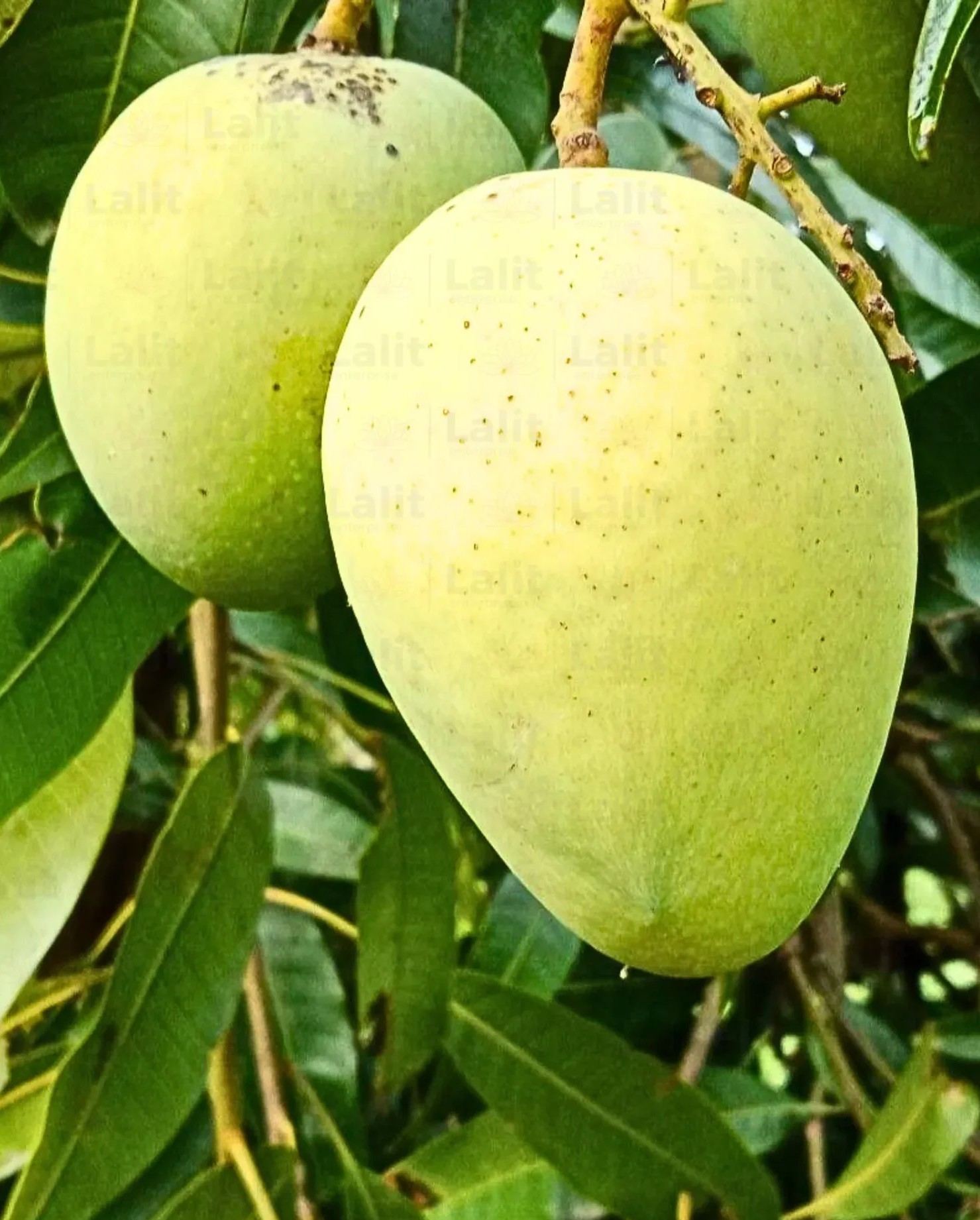
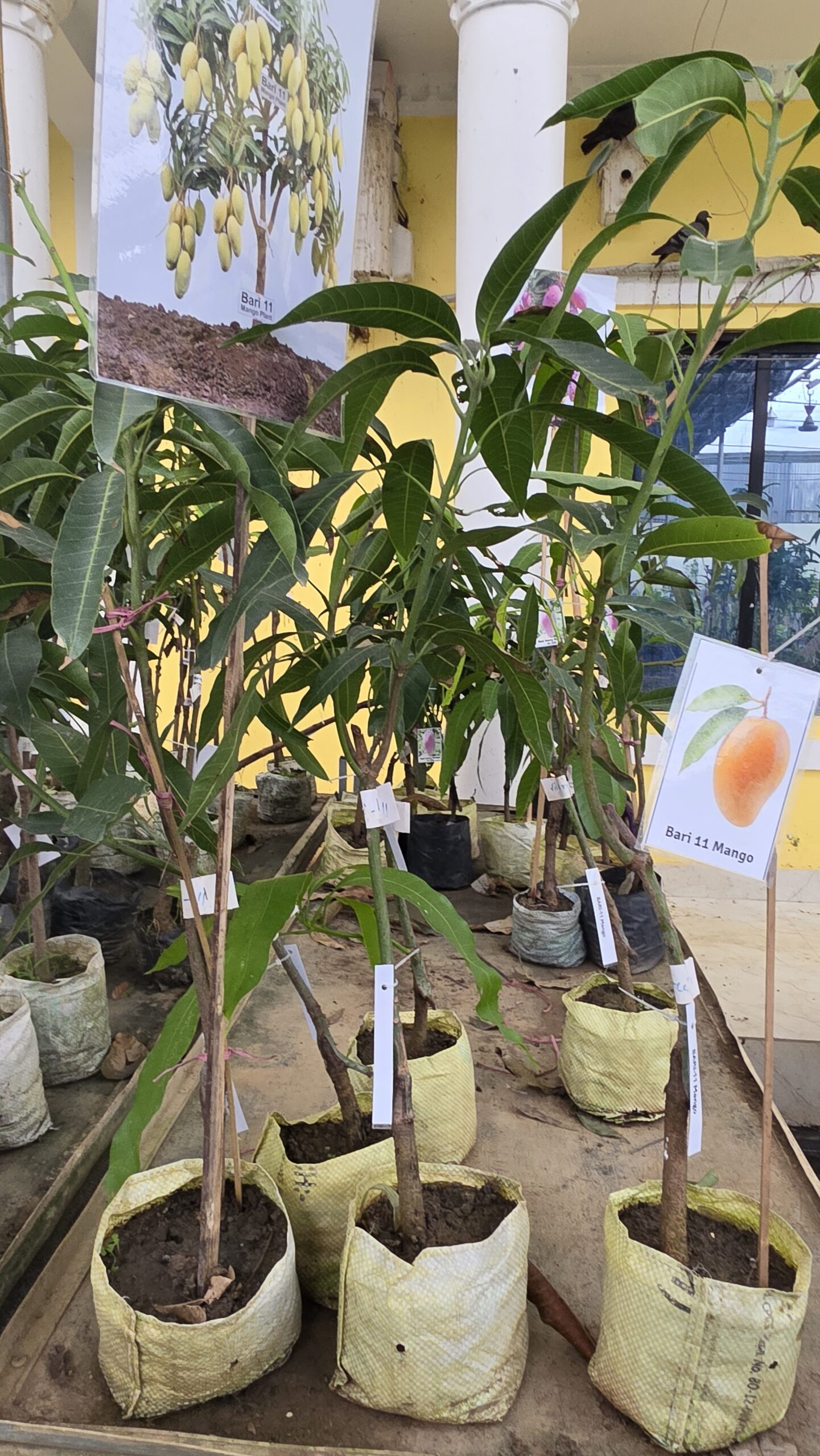
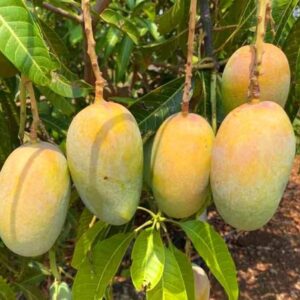
Appearance: The fruit is oblong or elongated in shape, measuring approximately 11.3 cm in length . When raw, the skin is a light green; upon ripening, it turns a yellowish-green with a golden hue .
-
Size and Weight: Each fruit weighs between 300 and 350 grams on average, though some growers report weights of 200 to 250 grams depending on growing conditions .
-
Flesh: The flesh is a deep yellow colour, smooth, and described as sweet and juicy, though it contains a slight amount of fiber . The total soluble solids (TSS) content is approximately 18.55%, indicating good sweetness .
-
-
Branchlets:
The branchlets are characteristic of the species. -
Bark:
The bark is typical of the mango species – greyish-brown.
Other Notable Features:
-
All-Season Bearing: This is the most significant feature of BARI-11. It produces fruit three times a year, with harvests aligning with three distinct seasons: March-April, May-June, and July-August .
-
High Yield: A mature tree is a prolific bearer. A 4–5 year old tree can produce 60–70 mangoes per season, and annual production can reach up to 50 kg per tree . On a commercial scale, yield is estimated at 22 tonnes per hectare .
-
High-Yield Clusters: Each flower cluster typically contains 5 to 6 mangoes .
-
Origin: BARI-11 is a naturally occurring hybrid and is not a genetically modified organism .
-
Grafted Plant Necessity: Like many commercial mango varieties, BARI-11 is best propagated through grafting. Seed-grown trees will not produce fruit true to the parent, whereas grafted plants ensure early fruiting, consistent quality, and reliable yield .
Climate Suitability for Nepal:
BARI-11 is an excellent choice for cultivation in Nepal due to its adaptability.
-
Ideal Regions: This variety is suitable for cultivation in all areas of Bangladesh and is considered appropriate for similar climates in India, Pakistan, and Myanmar . This makes it well-suited to Nepal’s Terai region, and its compact size and adaptability suggest potential for the warmer mid-hills.
-
Growing Conditions: It thrives in warm, tropical climates with full sunlight and well-drained loamy soil . It is a low-maintenance plant that requires minimal care once established .
Why Choose BARI-11 from Gupta Nursery:
-
Year-Round Harvest: The ability to harvest mangoes three times a year provides a continuous and reliable source of income or fresh fruit, offering a significant market advantage.
-
High-Yielding and Hardy: Its high yield and hardy, low-maintenance nature make it suitable for gardeners of all experience levels .
-
Space-Saving: The compact tree size makes it perfect for home gardens, terrace farms, and high-density planting .
-
Early Fruiting: Grafted plants can begin producing flowers and fruit within just one year of planting, providing a quick return on investment .
-
Proven Success: BARI-11 has been successfully cultivated commercially in Bangladesh, with farmers reporting good demand and attractive market prices (Tk 130-250 per kg) .
Cultivation Tips for Nepal:
-
Light: Requires full sunlight for optimal growth and fruit production .
-
Soil: Prefers well-drained, loamy soil with a slightly acidic to neutral pH .
-
Watering: Water regularly, particularly during the initial growth stages and dry periods. Avoid waterlogging .
-
Fertilization: Apply balanced fertilizers or organic compost to support robust growth and heavy fruit production .
-
Pruning: Regular pruning helps maintain the tree’s shape and encourages healthy flowering and fruiting .
At Gupta Nursery, we are proud to offer BARI-11 mango plants—a revolutionary variety that brings the joy of fresh, sweet mangoes to your table all year round, perfectly suited for the diverse climates of Nepal.
Reviews
There are no reviews yet.