
Description
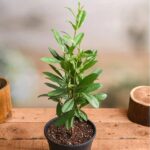
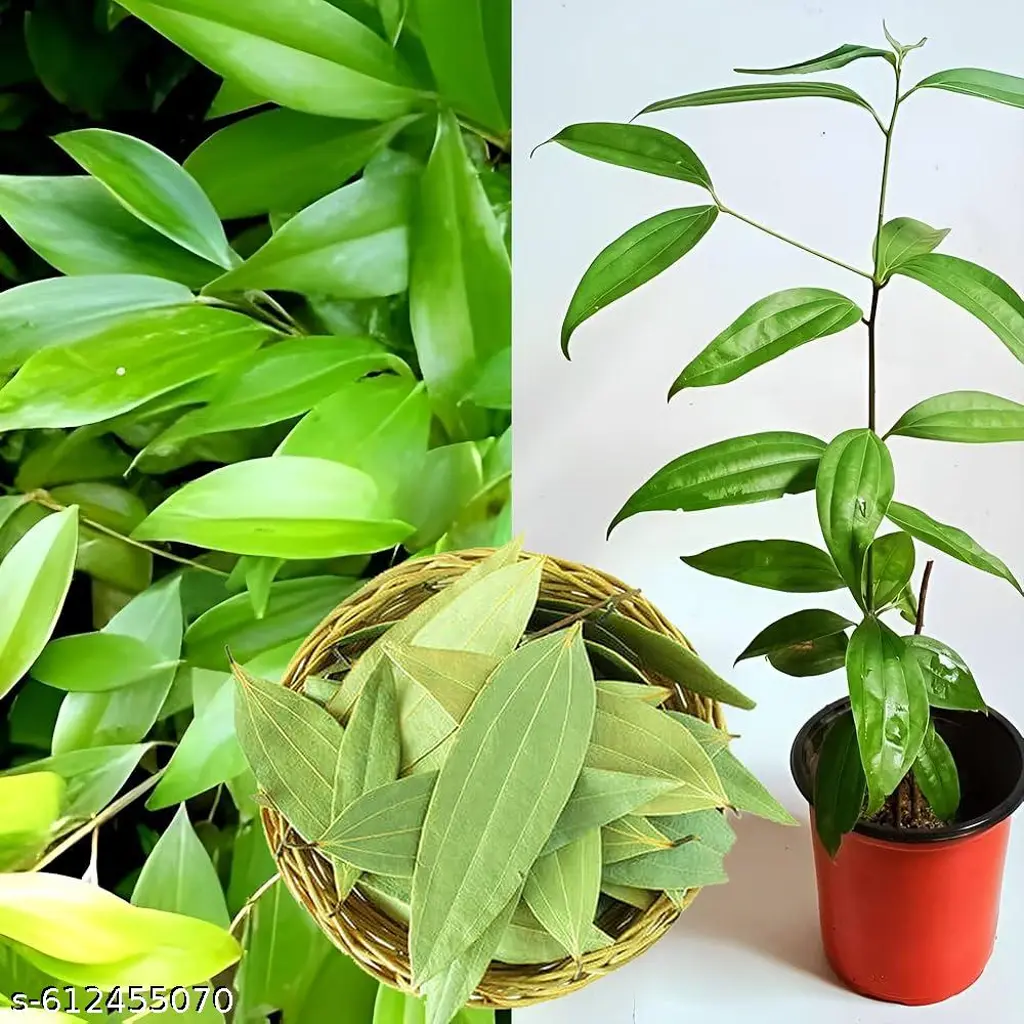
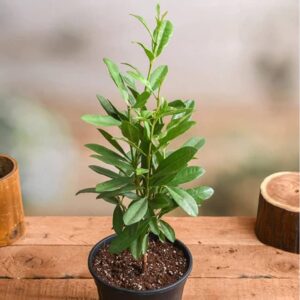
The plant known as Tej Patta (तेज पत्ता), Indian Bay Leaf, or Malabar Leaf, is scientifically named Cinnamomum tamala. It is a tree belonging to the Lauraceae family (the same family as cinnamon and bay laurel) and is native to the Himalayan region, including Nepal, India, Bangladesh, Bhutan, and China. In Nepal, the term “Tejpat” can sometimes refer to a mixture of leaves from Cinnamomum tamala and the closely related Cinnamomum impressinervium.
Detailed Description:
-
Size:
The tree is a small to moderately sized evergreen. Its height can vary significantly depending on its environment: it can grow up to 7.5 meters (25 ft) in cultivation, but in its natural forest habitat, it can reach up to 20 meters (66 ft) tall. -
Leaves:
The leaves are the primary reason for cultivating this plant. They are simple, arranged sub-opposite or spirally on the branches, and have a leathery (chartaceous to sub-coriaceous) texture. A key identifying feature is their trinerved venation (three prominent veins arising from the base). The leaf blades are relatively large, typically ranging from 6 to 20 cm in length. The upper surface is smooth and glossy, while the lower surface is pale and dull. The leaves have a strong, sweet clove-like aroma with a faintly peppery taste. This flavor is more similar to cinnamon or cloves than to the European bay leaf. -
Flowers:
The tree produces small, inconspicuous white flowers that bloom in clusters. -
Fruit:
The tree produces small berries, but they are not the commercially valuable part of the plant. -
Branchlets:
The branching pattern is characteristically zigzag. The branchlets are slender. -
Bark:
The bark is rough, dark grey to reddish-brown in color. It is sometimes sold as a lower-grade cinnamon substitute.
Climate Suitability for Nepal:
Tej Patta is a plant perfectly adapted to Nepal’s diverse geography.
-
Ideal Regions: It thrives in the tropical and sub-tropical Himalayas. It is commercially cultivated in the Middle Hill Range of Nepal, specifically in districts like Udayapur, Palpa, and Tanahun.
-
Altitude: It grows well at elevations between 450 and 2,100 meters above sea level. Some sources note its presence up to 2,000 meters.
-
Climate: It is a hardy tree that flourishes in the warm, temperate conditions of Nepal’s mid-hills. The fact that it’s widely cultivated in private lands across Nepal highlights its adaptability to local conditions.
Why Choose Tej Patta from Gupta Nursery:
-
High-Value Cash Crop: Tejpat leaves are one of Nepal’s most commercially important non-timber forest products. The trade is dominated by cultivated tejpat leaves, making it a reliable source of income.
-
Established Cultivation: Farmers in Nepal have a long history of successfully cultivating Tejpat on private land for income generation.
-
Long-Lived Production: The tree can be harvested for its leaves for up to a century after it matures.
-
Culinary and Medicinal Demand: The leaves are an essential spice in South Asian cuisine and are highly valued in traditional medicine for their digestive and stimulant properties.
Cultivation and Harvesting Tips for Nepal:
-
Planting: The tree grows well in the forests and farmlands of Nepal’s middle hills.
-
Harvesting: Leaves are typically harvested once a year, with the prime collection period being from October to March.
-
Maturity: Trees are ready for leaf harvesting when they reach about five years of age and a diameter of 16 cm at chest height.
At Gupta Nursery, we are proud to offer high-quality Tej Patta (Cinnamomum tamala) plants, a species that is not only a cornerstone of Nepali cuisine and traditional medicine but also a proven, profitable crop for farmers across the country.
Reviews
There are no reviews yet.