
Description
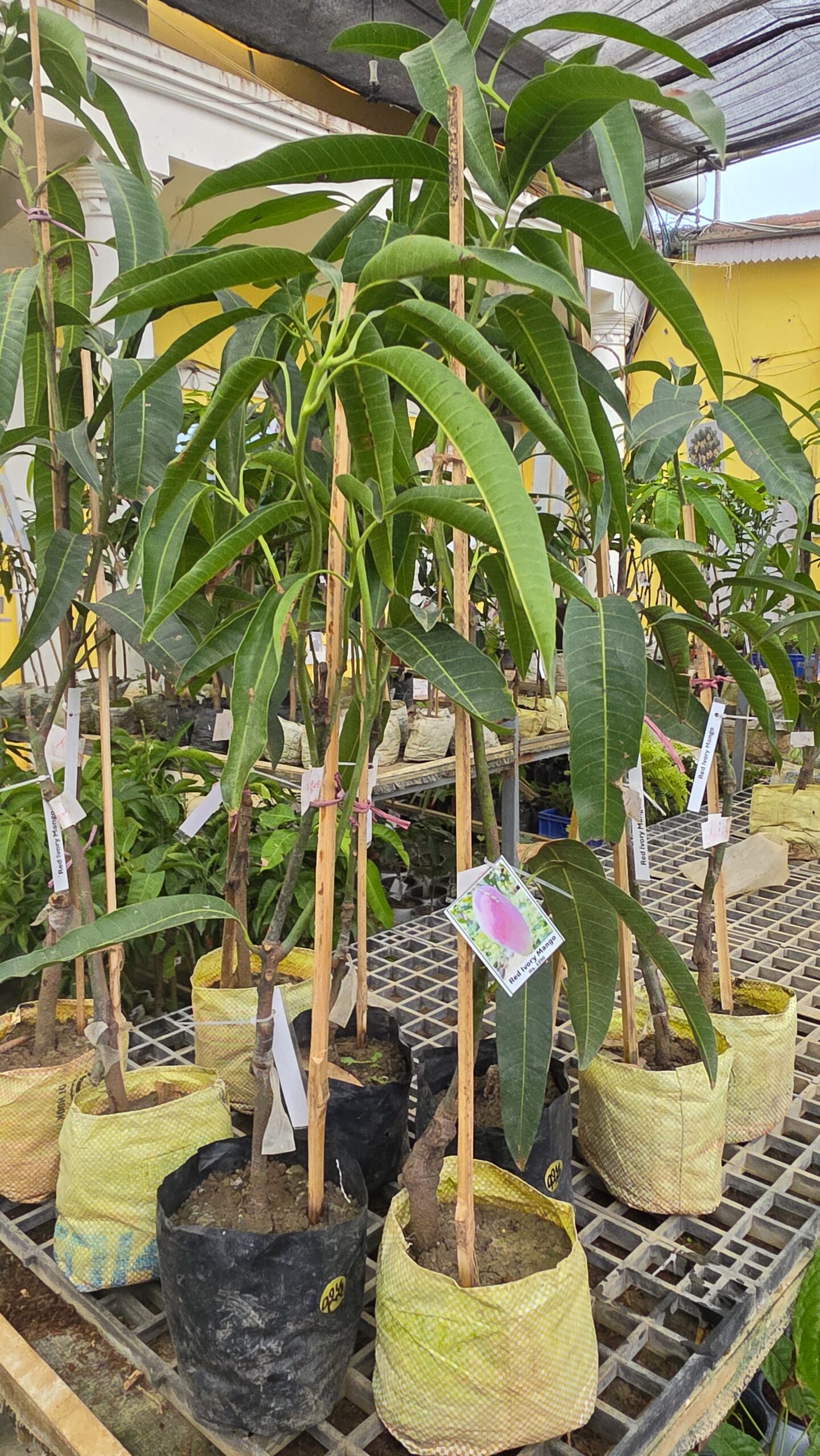
The Red Ivory mango is a rare and exotic variety that originated in Thailand . It has been cultivated in the region for over a century, first being introduced to Yunnan, China from Thailand in 1914 . The variety is named for its unique shape and colour—”Ivory” refers to its resemblance to a young elephant’s tusk , and “Red” describes its striking skin. It is rapidly gaining popularity among mango enthusiasts and collectors for its spectacular appearance and exceptional eating quality .
Detailed Description:
-
Size:
The Red Ivory mango tree is a medium-sized evergreen that can reach heights of 4 to 6 meters in cultivation, though it can grow up to 10–15 feet (3–4.5 meters) if left unpruned . Its manageable size makes it suitable for both ground planting and large containers, such as 24×24 inch grow bags . -
Leaves:
The leaves are typical of the Mangifera indica species – simple, lanceolate in shape, and a vibrant, glossy green that adds ornamental value to the tree . -
Flowers:
The tree produces fragrant, small white blooms in panicles . In South India, flowering typically occurs from October to November, while in North India it starts from January to February . -
Fruit:
The fruit is the defining feature of this variety:-
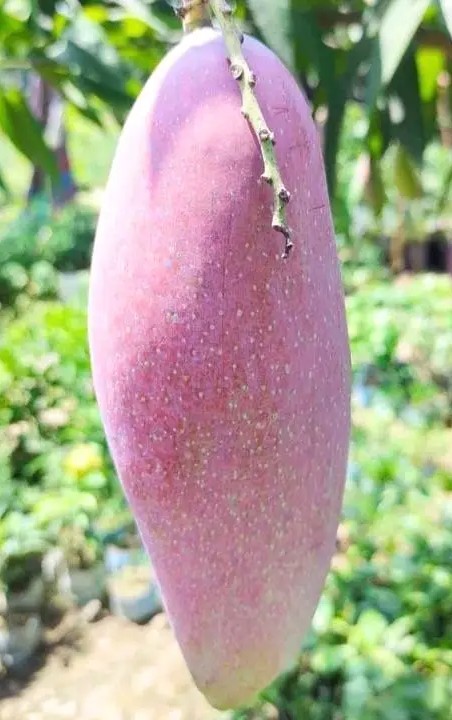
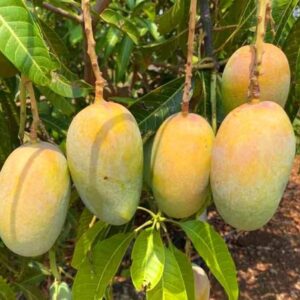
Appearance: The Red Ivory mango is renowned for its exotic colour—a striking vibrant red or reddish-pink blush over a smooth skin, often with yellow undertones . The fruit is oblong to oval in shape, resembling a young elephant’s tusk .
-
Size and Weight: It produces jumbo-sized fruits, typically weighing up to 2 kg per fruit .
-
Flesh: The flesh is silky-smooth, completely fiberless, and constitutes approximately 82% of the fruit – meaning a very small seed and a high ratio of edible pulp .
-
Taste: The flavour is exceptionally sweet, aromatic, and rich, described as having a tropical sweetness with a hint of citrus . It is considered a luxurious eating experience.
-
-
Branchlets:
The branchlets are characteristic of the mango species, forming a moderately dense canopy. -
Bark:
The bark is typical of the mango species – greyish-brown and fissured.
Other Notable Features:
-
High Market Value: The Red Ivory mango commands a premium price in the market due to its rarity, stunning appearance, and exceptional quality. In Bengaluru, it has been reported to sell for ₹500 per piece .
-
Grafted Variety: Grafted Red Ivory plants are preferred as they ensure the fruit is true to the parent variety and begin fruiting much earlier, often within 1.5 to 2 years of planting .
-
High Yield: A mature Red Ivory tree can produce nearly 500 kg of fruit annually under optimal conditions .
-
Versatile Use: The fruit is excellent for fresh eating, juices, desserts, and even gift hampers due to its luxurious appearance .
Climate Suitability for Nepal:
The Red Ivory mango is well-suited to Nepal’s climate, particularly the warmer regions.
-
Ideal Regions: Originating in Thailand, this variety thrives in tropical and warm subtropical climates. It has been successfully cultivated in the subtropical regions of Guizhou, China, as well as in West Bengal and other parts of India . This suggests it will adapt well to Nepal’s Terai region and similar warm zones.
-
Climate: The ideal temperature range for cultivation is 25°C to 38°C, making it suitable for Nepal’s hot summer months . It requires 6–8 hours of full sunlight daily and prefers well-draining soil with a slightly acidic pH .
-
Growing Season: The best time for planting is at the end of the monsoon season, ensuring the plant is protected from frost .
Why Choose Red Ivory from Gupta Nursery:
-
Exotic and High-Value: The Red Ivory mango is a rare, premium variety with exceptional fruit quality and a striking appearance that commands high market prices.
-
Early Fruiting: Grafted plants start fruiting within 1.5 to 2 years, providing a quick return on investment .
-
Pot-Friendly: The manageable size makes it suitable for terrace gardens, balconies, and containers .
-
Nepal’s Growing Mango Industry: Nepal has a thriving mango industry with significant commercial potential, making this premium variety an excellent choice for growers looking to tap into high-value markets.
Cultivation Tips for Nepal:
-
Light: Requires full sun exposure (6–8 hours daily) .
-
Soil: Prefers well-drained, fertile loamy soil with a pH between 6.0 and 7.0 .
-
Watering: Water twice a week; daily during peak summer. Avoid waterlogging .
-
Fertilization: Apply organic fertilizers like cow dung compost, neem cake, and vermicompost every 30–40 days .
-
Pruning: Light pruning helps control shape and height .
-
Pest Control: Spray neem oil to prevent fruit flies and mealy bugs .
At Gupta Nursery, we are proud to offer genuine grafted Red Ivory mango plants—a rare and exotic variety from Thailand that combines stunning red beauty with jumbo-sized, fiberless sweetness, perfect for adding a touch of luxury to any garden or orchard in Nepal.

Reviews
There are no reviews yet.